Complications · the 60-minute countdown
Reading a dive bezel
The ring around a diver's dial is the oldest safety device in watchmaking, and it only turns one way. Here is why, and how to use it above water.
What it actually does
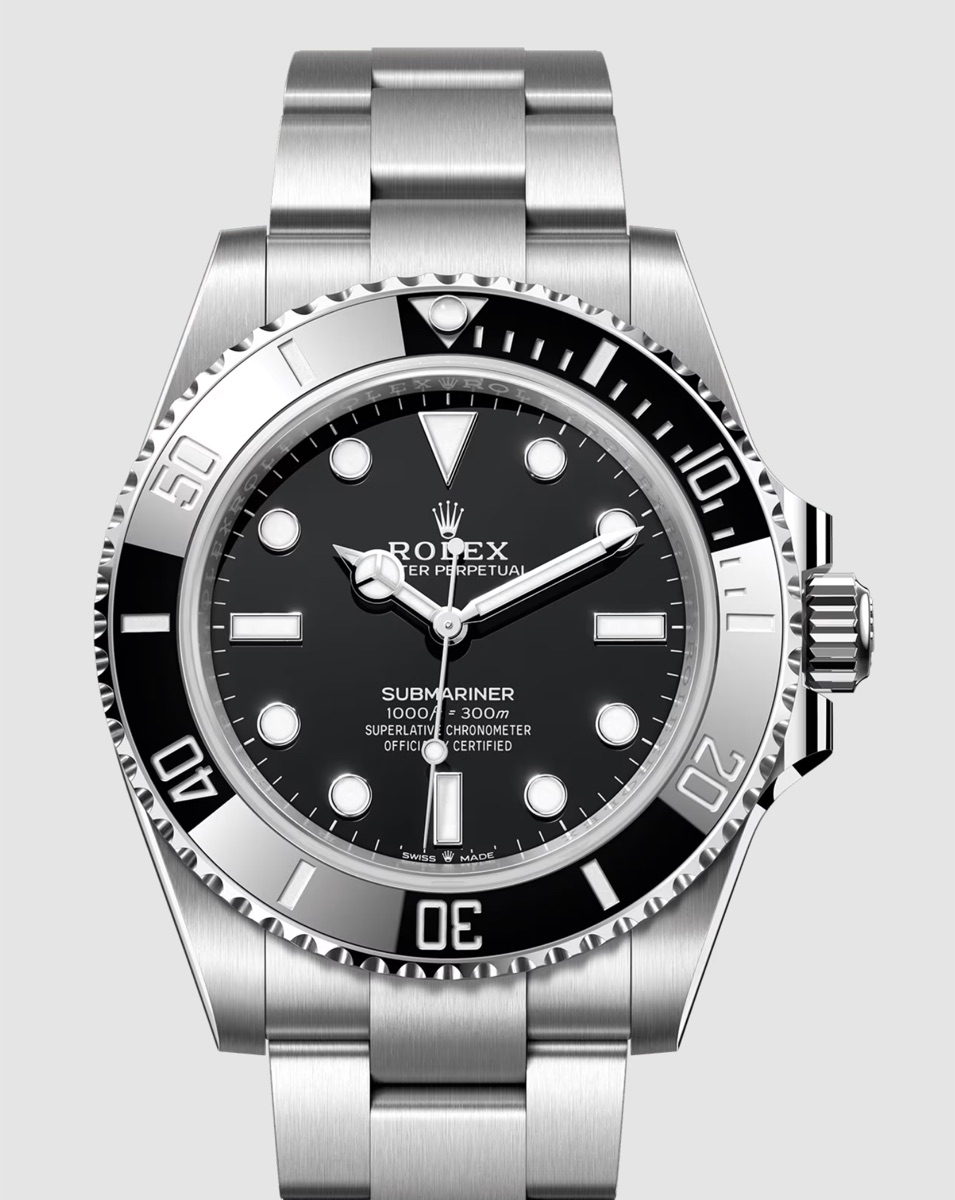
A dive bezel is a rotating 60-minute scale. Turn it so its zero marker — usually a luminous pip inside a triangle — lines up with the minute hand at the moment something starts, and from then on the minute hand points at how long that something has been going. No arithmetic, no remembering when you began, no squinting at a subdial: the elapsed time is simply where the hand is on the ring.
That is the whole instrument. Its genius is that it costs one gesture to set, reads at a glance in the dark or through fogged glass, and cannot run out, crash, or need charging. Underwater the number it shows is a breathing-gas and decompression calculation, which is why the thing exists at all. On land it is still the fastest timer anyone has built into a wrist.
Where it came from
The layout was settled astonishingly early. The two foundational dive watches — the Blancpain Fifty Fathoms and the Rolex Submariner, both of the early 1950s — already carried the rotating 60-minute ring, the luminous zero pip, and the high-contrast dial that every diver since has inherited. Later standards for diver's watches wrote the same features into law, which is why a dive watch from any maker, at any price, reads the same way: the bezel is one of the few pieces of interface design that got it right the first time and never needed changing.
Why it turns only one way
Grip a modern dive bezel and it ratchets anticlockwise in crisp clicks — 120 to a full turn on most — and refuses to move at all the other way. This is the safety device. If the bezel is knocked against a tank or a rock mid-dive, it can only slip in the direction that makes the elapsed time read longer than it truly is. The error sends the diver up early, surfacing with air and decompression margin to spare. A bezel that could slip the other way would quietly promise time that had already been spent, which is how divers used to get hurt.
A bezel that does rotate both ways is a different instrument wearing the same clothes. Usually it is a GMT bezel, marked to 24 hours rather than 60 minutes, there to track a second time zone against an extra hour hand — the Tudor Black Bay 58 GMT wears exactly this. Since no safety argument applies to knowing the hour in another country, there is no ratchet. Count the markings: 60 means elapsed time, 24 means somewhere else in the world.
The first quarter is marked differently
Look closely at almost any dive bezel and the first fifteen or twenty minutes carry individual minute hashes, while the rest of the ring makes do with marks every five. That finer scale is the business end. Safety stops and the last stage of an ascent are timed in single minutes, and a diver reading the bezel there is doing the one calculation where a minute of error matters most. The coarse remainder of the ring is for the long, forgiving middle of a dive. It is a small typographic decision that encodes an entire procedure — and once seen, it is the quickest way to recognise a true dive bezel across a room.
Using one on dry land
Set the pip to the minute hand when the parking meter starts, when the pasta goes in, when the meeting begins, when the laundry drum starts turning. Glance later; the minute hand reports. For anything under an hour it beats finding a phone, and it needs no app, no sound, and no battery.
Two habits worth having. Read it as elapsed time — “the hand is at 35, I started at zero, so 35 minutes gone” — rather than trying to count backwards to a deadline; the bezel is a stopwatch, not an alarm. And for a deadline trick it can still oblige: set the pip not to the minute hand but to where the hand will be when time is up, and the shrinking gap reads as time remaining. Sailors use purpose-made countdown bezels for exactly this; a dive bezel does it in a pinch.
Caring for one
A bezel is the one moving part of a dive watch that lives outside the case, and it collects what the ocean and the toolbox throw at it. Grit under the ring is what makes a good bezel feel bad; the cure and the prevention are the same — rinse it in fresh water after salt or sand, spinning it as you do. If the action ever goes from crisp to gravelly, that is a rinse or, at worst, a service conversation, not a fault to live with. The luminous pip deserves a glance too: on a true diver it is required to glow along with the hands, so the bezel can be read exactly when it matters most.